
The Ultimate Guide to Managing Oily, Acne-Prone T-zones
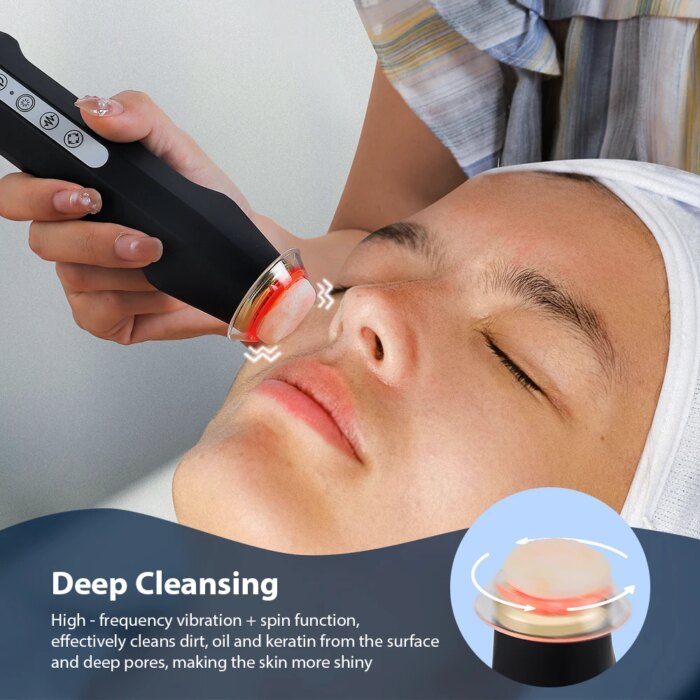
Picture the letter “T” in your mind’s eye. Adjust it to the size of an index card. Now, imagine cutting it out and slapping it smack-dab between your brows. Voila! You’ve fashioned a rudimentary map of what’s known as the “T-zone” in skincare. Ahead, you’ll discover how to care for the skin in your T-zone, why this area may be prone to breakouts, and more.
What Is Your T-zone?
Coined for its resemblance to the letter, the T-zone refers to the skin that covers the forehead, nose, and chin.
The T-zone occupies central facial real estate and houses pores just like the rest of the face. Like all pores, pores along the T-zone have oil glands, which produce natural oils, otherwise known as sebum. These oils function as our biological moisturizer, if you will, and can help maintain softness and balance, in addition to adding a layer of protection between skin and the elements. As with anything, however, too much of a good thing—sebum-churning, in this case—can impose challenges.
Oily T-Zone Causes
So-called “oily skin” is a product of overzealous sebum production. The T-zone, with its notably higher concentration of oil glands is particularly prone to oiliness. An over-oiled T-zone may appear shiny along the forehead, down the nose and center of the chin. Oftentimes, oily T-zones appear to have a sheen in photos (particularly in flash photography).
Acne-Prone T-Zone Causes
In addition to setting the stage for shine, an oily T-zone is fertile ground for blemishes to crop up. In excess, sebum is comedogenic (pore-clogging), which, in and of itself, can lead to pesky pimples. Adding external factors such as dirt, makeup, and pollutants added into the mix paves the way for whiteheads and blackheads.
People of virtually any age can experience T-zone shininess. Some skin is oilier by nature, and that’s perfectly normal! In fact, oiliness may help maintain youthful-looking suppleness as skin matures; mature skin may be more prone to dryness, which may exacerbate the appearance of fine lines and wrinkles.
Nevertheless, caring for an oily T-zone can be challenging. Luckily, supplanting shininess with a more even, matte finish is possible with the help of a few skincare ingredients and techniques.
Below you’ll find 8 tips for managing an oily T-zone—plus, the exact ingredients worth seeking and a list of skincare products that fit the bill.
8 Tips for Managing Oily T-Zones
1. Moisturize Strategically
While an oily T-zone may make you want to skip moisturizer entirely, it’s still important to keep the skin hydrated and address skin that’s both oily in the T-zone area and dry in the surrounding area. Consider a lightweight, water-based moisturizer on the T-zone, and a heavier, oil-infused cream on the cheeks to prevent dryness.
2. Carry Blotting Papers
If you’re prone to midday shininess in the T-zone, consider carrying blotting papers — lightweight, tissue-like slips that absorb excess oil in a few gentle pats. In a pinch, clean toilet seat covers can work too, though a pack of blotting papers is much more convenient, effective, and easy to carry.
3. Look for Oil-Absorbing Skincare Ingredients
Formulations containing clay and charcoal are popular choices for managing excess oil in the T-zone area. These ingredients are known for their ability to draw out surface-level impurities and absorb sebum. Applying a mask formulated with clay or charcoal just to your T-zone is a great example of “multi-masking,” which can help give the area a more balanced and mattified appearance without over drying the rest of your face.
4. Seek Salicylic Acid
Beta-hydroxy acid (BHA) is a chemical exfoliant that helps to remove dead skin cells from the skin’s surface. Because BHA is oil-soluble, it is especially useful for oily areas of the face. Using formulas containing salicylic acid can help improve the look of pores and assist in managing the visible oiliness that often concentrates on the forehead, nose, and chin.
5. Add Alpha Hydroxy Acids
Also known as AHAs, the category includes ingredients like glycolic, lactic, and citric acids, each of which can help break up dead skin cells. In doing so, AHAs resurface the skin and clear away debris that could potentially mix with excess oil to create blemishes.
6. Avoid Over-Exfoliation
While it may be tempting to pile on the acid-spiked toners or employ an exfoliating face scrub numerous times to nix the shine, there is such a thing as too much exfoliation. Doing so can actually lead to further irritation and delay desired results. Moreover, too much exfoliation can weaken your skin barrier, which is crucial in maintaining balance and healthy moisture.
7. Befriend Foaming Cleanser
A foaming cleanser is specifically engineered to create a rich lather. This lather is particularly effective at breaking down and washing away excess sebum, along with surface impurities and makeup. For someone with an oily skin type, who naturally produces more sebum, this deep-cleaning action can be beneficial for managing shine and ensuring pores don’t get clogged, leaving the skin feeling thoroughly cleansed.
8. (Re)introduce Retinol into Your Routine
Retinol, a vitamin A derivative with anti-aging properties, can help reduce excess sebum production and tighten the appearance of overly oiled pores. If you’ve tried retinol for anti-aging benefits, only to stop at the sight of flaky, dry, red skin, consider re-introducing a retinol serum to your routine for the sake of balancing oiliness. If you’re not ready to deal with the adjustment period, consider looking for a gentler retinol serum. Your dermatologist can help you determine if retinol is right for you and what products your skin may be able to tolerate.
Best Skincare Products for Oily and Acne-Prone T-Zones
Youth to the People Adaptogen Deep Moisture Cream
Balance is the name of the game when it comes to addressing oily T-zones and dry cheeks. This ultra-hydrating moisture cream is a key player in this domain. Infused with adaptogens and known for its balancing prowess, this moisturizer keeps skin supple in all areas without adding excess greasiness in the T-zone.